What if God’s wrath in Revelation isn’t wrath at all?
What if what we call wrath is simply a misunderstanding of God’s holiness — His qadosh?
What Is Qadosh?
Qadosh is the Hebrew word for holiness — but it is far more than moral purity or spiritual cleanliness.
It means otherness.
It is the blazing perfection, completeness, and integrity of God that cannot be reduced to human standards.
It is the Trinity in unbroken union.
It is the fire that does not consume itself.
It is beauty too pure for sin to survive.
And because it cannot be reduced, it cannot be compromised.
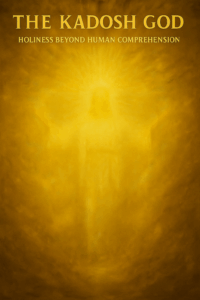
The kadosh of God — holiness beyond human comprehension
Holiness That Cannot Be Approached Lightly
In the Old Testament, kadosh was so potent that only the High Priest could enter the Holy of Holies — and even then, only once a year.
Anyone who entered that sacred space at the wrong time, or without the proper consecration, died.
Not because God was angry — but because God is holy.
Holiness cannot embrace what is unholy.
It is not an emotional reaction. It is a spiritual reality.
“But he shall not go in to the veil or come near the altar, because he has a blemish, that he may not profane my sanctuaries, for I am the Lord who sanctifies them.” — Leviticus 21:23
The Throne Room: Holiness Unveiled
Revelation begins in the throne room (Revelation 4).
From this holy place — not from a battlefield — come the scrolls, the trumpets, and the bowls.
These are not weapons of rage.
They are sacred responses flowing from the throne of holiness.
Just as in Leviticus and Numbers, when God responded to covenant breach with sacred sanctions, Revelation echoes this pattern. God is not lashing out — He is remaining true to Himself.
Is It Wrath — Or Holiness?
We call it wrath.
But that’s our language.
What we are witnessing in Revelation is not rage —
it is the consequence of unholiness encountering holiness.
The Stove That Burns
Think of a hot stove.
It does not burn you because it is angry.
It burns you because it is hot.
It cannot stop being hot — because that is its nature.
This is what God’s holiness is like.
He is not looking for opportunities to punish.
He is simply unchanging in His purity.
And anything that comes near Him must be made holy, or it will burn.
Like a hot stove, God’s holiness is not anger but simply His unchanging nature
Why Revelation Begins With Holiness
Revelation flows from the throne of God — the place of kadosh:
- The seals are opened in heaven.
- The trumpets sound from the sanctuary.
- The bowls are poured out from the temple.
These are not acts of divine temper — they are the movement of holiness.
But note this:
God never acts without also inviting.
He never judges without also calling.
That is where His character shines brightest.
Holiness, Love, and Faithfulness — Not in Tension
God’s kadosh is not opposed to His love.
It’s not the opposite of mercy.
It is the foundation of both.
In Revelation, the Lamb reveals a God who is:
- Qadosh — holy and untouchable
- Ḥesed — deeply loving and loyal
- Berith — covenant-keeping and faithful
These qualities don’t compete.
They harmonize.
Because God is holy, He calls for repentance.
Because God is love, He desires reconciliation.
Because God is faithful, He keeps reaching for those who break covenant.
“Holy, holy, holy, is the Lord God Almighty, who was and is and is to come!” — Revelation 4:8
Not a Terrifying God — But a Consistent One
Holiness is not God’s fury.
It is God’s essence.
When we stop calling it wrath and start calling it holiness, we begin to see Revelation differently.
We no longer see an unpredictable God.
We see a consistent One.
A faithful One.
A holy One who longs to dwell with His people — and made a way through the Lamb.
Holiness Is an Invitation — But It Will Change You
Most people think of holiness as a warning.
But in Revelation, holiness is an invitation:
“Be holy, as I am holy.”
This is not a call to moral perfection.
It’s a call to relational transformation — to dwell in the presence of God and be remade by Him.
The Lamb’s invitation to transformation through His holiness
A Final Word
Revelation is not a book of anger.
It is a book of awe.
The throne still stands.
The tabernacle is still holy.
The Lamb still calls.
And if we are willing to come close — on His terms, not ours —
we will find that holiness is not the end of the story.
It’s the beginning of a new one.
Take Your Next Step in Understanding Revelation
Do you want to deepen your understanding of God’s holiness in Revelation? Consider these next steps:
- Reflect: How does seeing God’s “wrath” as holiness change your reading of Revelation?
- Discuss: Share this perspective with a friend or small group.
- Study: Explore the Hebrew concept of qadosh in other biblical passages.
- Subscribe: Join our newsletter for more theological insights like this one.
? Revelation Reframed — a chapter-by-chapter guide
Author

