The Black Horse of Revelation: Unveiling the Truth About Divine Justice
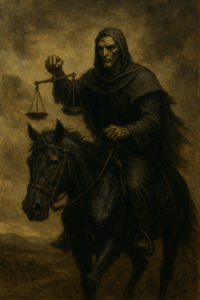
The Black Horse rider with scales represents economic injustice, not divine punishment
Introduction: Rethinking the Black Horse
The third seal in the Book of Revelation opens to reveal a black horse and its rider holding scales. A voice announces: “Two pounds of wheat for a day’s wages, and six pounds of barley for a day’s wages, and do not damage the oil and the wine!”
Maybe it’s better understood as the inevitable unraveling that happens when human beings resist the gravitational pull of holiness—a pull that is always relational, always loving, always seeking to restore.
The traditional reading fractures our understanding of divine character, creating a God who violates His own essence to punish rebellion. But what if the Black Horse isn’t God’s weapon against humanity but rather His mirror held up to show us the natural consequences of our collective choices?
This isn’t just semantic wordplay. It’s a fundamental reorientation of how we understand God’s relationship to human suffering. It asks us to consider whether the devastation described in Revelation originates from divine decree or from humanity’s persistent rejection of divine order.
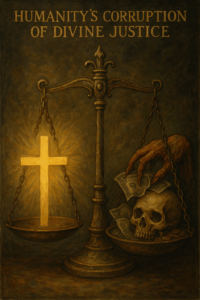
The scales represent humanity’s corruption of divine justice
The Economy of Rebellion Revealed
The Black Horse doesn’t cause economic collapse; it unveils the reality already festering beneath society’s surface. It follows the Red Horse of violence as a logical consequence. A world at war cannot sustain its economy. Resources shift to conflict. Trade routes shatter. Chaos creates scarcity.
This progression isn’t arbitrary but predictable. The White Horse reveals the antichrist’s false peace, the Red Horse exposes the violence that erupts when truth is rejected, and the Black Horse reveals the economic devastation that follows. Each horse builds upon the previous, showing the cascading consequences of humanity’s rejection of God.
The scales—universal symbols of justice—become perverted instruments of inequity. They measure out a pittance for honest labor, exposing a system rigged against the vulnerable. A day’s wages buys barely enough grain to survive. The working class buckles under systemic corruption and greed.
Consider what this means: the entire day’s labor of a person buys just enough wheat to feed themselves—nothing left for family, shelter, or any other necessity. This isn’t merely scarcity; it’s exploitation masquerading as scarcity. It’s a system where the powerful have rigged the scales to ensure their abundance while others starve.
This famine isn’t an arbitrary heavenly act. It’s the natural outcome of a world that said no to God’s order, choosing instead self-interest and moral decay. The economic collapse doesn’t require divine intervention—it’s the inevitable result of human systems built on exploitation rather than justice.
And here’s the crux: The Black Horse represents a profound act of divine honesty. God, in His unchanging nature, doesn’t cause these horrors. He simply allows humanity to see the tragic results of its own choices. The famine emerges as a self-inflicted wound—a natural spiritual law that when you abandon righteousness, economic and social order inevitably collapse.
The rider doesn’t create the conditions; he reveals them. The scales don’t cause injustice; they expose the injustice already present. This is why Revelation presents these images as “seals” being opened—they unveil what already exists but has been hidden from view.
God’s Unchanging Character: Hesed, Qadosh, and Berith
The Black Horse makes theological sense only when anchored in God’s unshakeable attributes. This interpretation protects divine character from human projections of a vengeful, punitive deity. Three Hebrew concepts illuminate this understanding: Hesed (steadfast love), Qadosh (holiness), and Berith (covenant).
Hesed: Unwavering Love Revealed
If God were vengeful, the command would destroy everything. Yet Revelation 6:6 contains a crucial phrase: “and do not damage the oil and the wine!” This represents divine Hesed (steadfast love) amid terrifying unveiling.
Hesed isn’t merely affection; it’s covenant faithfulness that persists even when the covenant partner fails. It’s love that doesn’t depend on reciprocation. It’s mercy that remains even when judgment would be justified.
This command isn’t protecting luxury goods for the wealthy. That would contradict God’s character, which throughout Scripture shows particular concern for the poor and oppressed. Rather, it reveals human priorities gone wrong. Even during catastrophic scarcity, humanity—through inherent greed—clings to luxuries while the poor starve.
The command exposes a horrifying truth: the problem isn’t resource scarcity but utter disregard for justice. Power systems, even during suffering, protect their interests first. The famine stems not from insufficient grain but from a world that clings to its oil and wine rather than sharing bread.
God’s Hesed works not by punishing but by revealing humanity’s sin. It’s an act of mercy to show us our condition, to make visible what we’ve tried to hide from ourselves. Like a physician who diagnoses a disease so it can be treated, God’s love compels Him to show us the truth about ourselves.
In ancient Near Eastern economics, wheat and barley were necessities, while oil and wine were luxury goods enjoyed primarily by the wealthy. The voice’s command reveals that even in economic collapse, luxury goods remain protected while staples become unaffordable. This isn’t divine preference for the rich; it’s divine exposure of human injustice.
Qadosh: Divine Holiness Exposed
God’s holiness (Qadosh) isn’t merely a moral attribute; it forms His very essence. It cannot be compromised. This holiness either draws humanity in for purification or exposes rebellion. The Black Horse demonstrates the latter. Divine holiness demands truth and cannot coexist with the illusion of justice built on injustice.
Qadosh doesn’t mean moral perfection as much as it means “set apart” or “other.” God’s holiness is His utterly unique and perfect nature that stands apart from all creation. When this holy presence encounters falsehood, it naturally exposes it—not as an act of vengeance but as an inevitable consequence of truth meeting falsehood.
The scales in the rider’s hand show how humanity corrupted what God intended for good. Throughout Scripture, scales symbolize justice (Proverbs 16:11, Leviticus 19:36). God’s law demanded accurate weights and measures to ensure economic fairness. But humanity perverted this divine standard, using scales to legitimize exploitation.
God’s Qadosh doesn’t destroy the scales; it allows them to expose perpetrated injustice. The Black Horse, through its silent proclamation of high prices, delivers a living sermon on the consequences of abandoning divine order.
It represents God’s holiness shining piercing light on systems of greed and exploitation, revealing them as utterly corrupted by human self-centeredness. The famine manifests spiritual reality physically—a world that traded holiness for convenience and justice for profit.
This isn’t God imposing holiness through punishment; it’s God allowing holiness to reveal what is already true. Like light entering a dark room doesn’t create the objects it illuminates but simply makes them visible, God’s holiness doesn’t create injustice but exposes it.
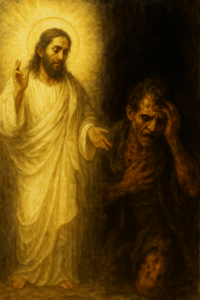
God’s holiness reveals human corruption rather than causing suffering
Berith: Consequences of Broken Covenant
The Black Horse emerges as the inevitable outcome of broken Berith (covenant). God’s covenant with humanity centers on mutual care and faithfulness—promising community living, resource sharing, and protecting the vulnerable. In ancient Israel, God’s Law contained principles of social and economic justice. The year of Jubilee, care for widows and orphans—these weren’t suggestions but foundational to God’s Berith.
Berith isn’t a contract based on performance but a relationship founded on promise. God established covenants with Noah, Abraham, Moses, and David, each expanding His commitment to restore creation through faithful partnership with humanity. These covenants contained economic provisions: land distribution, debt forgiveness, gleaning rights for the poor, and prohibitions against exploitation.
The Black Horse reveals what happens when humanity abandons this covenant. The famine isn’t punishment for covenant-breaking but a direct, unavoidable consequence of living without one. In a society rejecting Berith, the strong inevitably crush the weak. The powerful hoard while the poor starve.
The economic collapse depicted by the Black Horse shows what happens when societies reject God’s economic principles: the sabbath year that forgave debts, the jubilee year that redistributed land, the gleaning laws that ensured no one went hungry. When these covenantal protections are abandoned, economic predation becomes inevitable.
The Black Horse simply makes this tragic reality visible—a testament to God’s unwavering faithfulness to His moral law: what you sow, you reap. The famine emerges as a self-inflicted wound, the logical culmination of a world rejecting righteousness for a culture of greed.
The Immutability of God: The Central Theological Anchor
At the heart of our understanding of the Black Horse lies a fundamental theological truth: God is immutable. His character doesn’t change. His holiness isn’t a quality He possesses; it’s His very essence. This forms the bedrock of His identity.
Traditional interpretations often create a theological contradiction—a God who is love (1 John 4:8) but who allegedly sends famine to punish rebellion. This creates a fracture in our understanding of divine character, suggesting God can act contrary to His nature.
But if holiness is the essence of God’s being, it means He is utterly pure, unchanging, and set apart from all that is fallen. His holiness doesn’t confine Him; it defines every single action. He cannot, under any circumstance, act with unholy intent or practice, for that would compromise His very nature and make Him changeable.
This holiness isn’t static but active and alive. When it encounters humanity, it either unravels and exposes those in rebellion or draws in and transforms those willing to be aligned. The Black Horse powerfully demonstrates the first effect.
The traditional view that God sends economic devastation as punishment requires us to believe that the God who is love sometimes acts unlovingly. But what if we’ve misunderstood the nature of revelation itself? What if Revelation doesn’t describe what God does to the world but what the world does to itself when it rejects God?
This reframing preserves divine consistency. The same God who commanded Israel to care for the poor and vulnerable in the Law, who proclaimed justice through the prophets, who was incarnated in Christ’s solidarity with the marginalized—this God doesn’t suddenly become the author of economic exploitation. Rather, He reveals what happens when His principles of justice are abandoned.
Modern Implications: Living Under the Black Horse
Global Economics: The Black Horse Rides Today
The Black Horse’s message extends beyond the first century. It offers a timeless revelation of spiritual dynamics in empire and power. Our modern world, despite technological advancement, still lives under the Black Horse’s shadow. Global supply chains, financial systems, and international trade agreements often mirror those ancient vision injustices.
Consider today’s economic realities: a world where eight individuals possess the same wealth as the poorest half of humanity. A system where essential workers struggle to afford basic necessities while luxury markets thrive. Financial structures that protect corporate profits while cutting social safety nets. These aren’t just political problems; they’re spiritual manifestations of the Black Horse’s reality.
They protect the “oil and wine” of the powerful while leaving millions without basic necessities. Our modern world’s scales remain imbalanced, testifying that humanity’s self-centeredness and moral decay remain constant.
When massive corporations report record profits while their workers rely on public assistance, we see the Black Horse’s scales at work. When nations protect luxury goods markets while children starve, we hear the voice from Revelation: “Two pounds of wheat for a day’s wages…but do not damage the oil and wine!”
The financial collapse of 2008 revealed banking practices that protected the wealthy while devastating middle and working-class families. COVID-19 exposed how economic systems prioritize certain industries and demographics while abandoning others. Climate change disproportionately affects the world’s poorest while those most responsible remain insulated by their wealth.
These aren’t random occurrences but manifestations of the same spiritual reality the Black Horse reveals: economies built on exploitation rather than justice inevitably produce suffering.
Personal Response: Confronting Our Complicity
The Black Horse challenges not just systems but individuals. It forces us to examine our participation in economic injustice. Do we protect our “oil and wine” while others lack bread? Do our consumer choices perpetuate exploitative supply chains? Does our financial planning reflect covenant principles or self-centered accumulation?
The spiritual reality the Black Horse reveals isn’t distant or abstract—it’s woven into our daily economic decisions. Every purchase, investment, and donation either aligns with God’s covenant principles or perpetuates the very systems the Black Horse exposes.
This isn’t about inducing guilt but inviting transformation. The Black Horse calls us to reexamine our relationship with money, possessions, and economic systems. It challenges us to live covenantally in a world that has abandoned covenant.
Practical responses might include:
- Examining consumption patterns for exploitation
- Investing ethically, even at lower returns
- Supporting businesses with just labor practices
- Advocating for economic policies that protect the vulnerable
- Practicing generosity that extends beyond charity to justice
The Black Horse reveals three powerful truths for today:
- Greed, not God, causes our suffering. The famine represents a self-inflicted wound, the logical culmination of a world saying no to God’s order, choosing instead self-interest and moral decay. Every economic crisis stems not from divine punishment but from human choices that prioritize profit over people.
- Economic systems crushing the poor aren’t just political problems but spiritual ones. They symptomize a broken covenant—a world trading justice for convenience, compassion for profit. When we see homelessness, food insecurity, and medical bankruptcy, we’re witnessing not God’s judgment but humanity’s rejection of covenant principles.
- Even in our darkest scarcity moments, the problem isn’t resource lack but righteousness lack. The command not to damage oil and wine painfully reminds us that even in dire moments, self-centeredness clings to what it has rather than sharing with those in need. Global food production could feed everyone, yet millions starve while others waste abundance.
Revelation’s Warning: The Danger of Misinterpretation
Perhaps one of the most sobering implications of the Black Horse is how easily we misinterpret divine revelation. By reading Revelation as God causing economic devastation rather than revealing its spiritual roots, we risk becoming accomplices to injustice.
When we attribute economic suffering to divine punishment, we subtly justify inaction. After all, if God ordained this famine as judgment, who are we to interfere with divine discipline? This misreading has historically been used to spiritualize poverty as divinely ordained rather than addressing its systemic causes.
This misinterpretation creates a theological framework that actually perpetuates the very injustice the Black Horse reveals. It turns God into the author of suffering rather than its opponent, and turns believers into passive observers rather than agents of restoration.
Revelation’s apocalyptic imagery wasn’t meant to predict specific historical events but to unveil spiritual realities that persist throughout history. The Black Horse rides in every generation where economies serve the powerful at the expense of the vulnerable. And in every generation, the temptation exists to mistake revelation for causation.
The warning is clear: when we confuse God’s revealing with God’s causing, we risk becoming participants in the very systems God is exposing. We may even invoke divine authority to justify economic arrangements that God is actually condemning.
Toward a Theology of Divine Disclosure
The Black Horse invites us toward a theology of divine disclosure rather than divine punishment. Throughout Scripture, God’s primary action isn’t inflicting suffering but revealing truth. From the Garden of Eden where God asked, “Where are you?” to Christ who declared, “I am the truth,” God’s consistent work has been disclosure rather than destruction.
This theology reframes how we understand divine justice. Justice isn’t God imposing suffering on wrongdoers but God revealing the truth about wrong and its consequences. The Black Horse doesn’t bring famine; it brings awareness of famine’s spiritual causes.
Divine disclosure operates on three levels:
- It reveals what is already true but hidden
- It creates the possibility of repentance through awareness
- It establishes accountability by removing the excuse of ignorance
This understanding transforms how we read not just Revelation but all of Scripture. The prophets weren’t announcing what God was about to do to Israel but revealing what Israel was already doing to itself. Jesus’s parables weren’t threats of future punishment but revelations of present spiritual reality.
A theology of divine disclosure maintains God’s consistent character throughout Scripture. The God who created all things good, who covenanted with humanity for restoration, who was incarnated to reconcile all things, who will ultimately make all things new—this God doesn’t temporarily become the author of suffering but consistently reveals truth so healing can begin.
Conclusion: Divine Truth, Not Divine Punishment
The Black Horse emerges not as cause but as profound revelation of humanity’s self-centeredness and moral decay consequences. It exposes systemic injustice, greed, and inequality that inevitably fracture society when no longer aligned with its Creator.
It represents a terrifying yet merciful act of divine disclosure forcing humanity to confront a painful truth: the famine isn’t from God but a self-inflicted wound, the logical culmination of a world abandoning God’s covenantal principles of righteousness and vulnerable care.
When viewed through Hesed, Qadosh, and Berith lenses, the Black Horse stands not as judgment on humanity but as living testament to what humanity creates when forgetting its maker. It reveals not God’s vengeance but humanity’s capacity for self-destruction when it abandons divine order.
God’s holiness is not a distant purity—it’s a living pursuit. When we encounter true holiness, we are invited to surrender to it—not in fear, but in love. To resist that invitation is to fracture ourselves, because what we are resisting is the very thing that gives us life, purpose, identity, and wholeness.
The Black Horse calls us back to covenant—not arbitrary rules, but alignment with who God is. It invites us to reimagine economic systems built on justice rather than exploitation. It challenges us to examine our complicity in structures that protect luxury while neglecting necessity.
And perhaps most importantly, it reveals a God whose unchanging character remains steadfastly loving even when exposing painful truths. A God who doesn’t send famine but reveals its spiritual roots so we might return to covenant faithfulness.
How might our world look different if we embraced this understanding of Revelation’s Black Horse? How would our economic choices change if we saw them through this lens? Share your thoughts in the comments below.
? Revelation Reframed — a chapter-by-chapter guide

?️ Theology of the Lamb — a theological deep dive
Author

