Introduction: Revelation’s Paradox of Timing
This paradox isn’t a puzzle to solve. It’s a divine strategy. Revelation doesn’t invite us to become date-setters. Instead, it calls us to become watchful disciples who live faithfully in every season.
Maybe we’ve misunderstood Revelation’s purpose all along. Perhaps the apocalyptic imagery isn’t meant to be decoded into timelines, but to awaken us to the deeper realities at work in our world. The dragons and beasts of Revelation aren’t calendar markers—they’re portraits of spiritual forces that continue to shape human history.
The mystery of timing in Revelation creates a productive tension. It keeps us leaning forward in anticipation while rooting us deeply in present faithfulness. And here’s the crux: Revelation’s ambiguity about timing isn’t a flaw in the divine communication—it’s intentional. It’s the gravitational pull of mystery that draws us into deeper relationship with the God who transcends our timelines and calculations.
The early Christians who first received Revelation lived under Roman oppression. They weren’t given Revelation as a crystal ball to predict the future, but as a lens to interpret their suffering and to sustain their hope. Similarly, we receive Revelation not as a coded schedule of end-time events, but as an invitation to faithful living in our uncertain times.
Jesus’ Unmistakable Words: “No One Knows”
Revelation aligns perfectly with Jesus’ clearest teaching on timing:
“But about that day or hour no one knows, not even the angels in heaven, nor the Son, but only the Father.” (Matthew 24:36)
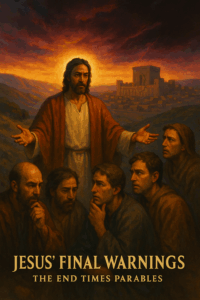
This direct statement removes any room for prediction. Revelation’s scrolls, seals, and trumpets cannot be turned into a secret code to outwit heaven. The boundaries are firm.
When the disciples pressed Jesus after His resurrection, He responded the same way:
“It is not for you to know the times or dates the Father has set by his own authority.” (Acts 1:7)
And again, He reinforced the call to readiness, not calculation:
“You also must be ready, because the Son of Man will come at an hour you do not expect.” (Luke 12:40)
Jesus could not have been clearer. Revelation echoes Him by repeating that the end will come suddenly and without warning.
But maybe there’s something deeper here. Maybe Jesus isn’t just withholding information—He’s inviting us into a different relationship with time itself. The unknown timing of Revelation’s fulfillment creates a perpetual now, a continuous present in which we’re called to live faithfully. This isn’t divine coyness—it’s divine wisdom.
Jesus’ words about timing aren’t about concealment but about refocusing our attention. When we stop calculating the timing of Revelation’s fulfillment, we can start embodying its message. The uncertainty doesn’t diminish Revelation—it amplifies its power to shape our living in the present moment.
The consistent message across the gospels and into Revelation is that our task isn’t prediction but presence—being fully awake and responsive to God’s work in our time. This is why Jesus linked the unknown timing to watchfulness. The mystery isn’t meant to frustrate us—it’s meant to focus us.
The Thief in the Night: Revelation’s Central Metaphor
Perhaps the strongest metaphor in Revelation is the image of Jesus coming like a thief.
“Behold, I am coming like a thief! Blessed is the one who stays awake, keeping his garments on…” (Revelation 16:15)
A thief never:
- Sends a calendar invite with his arrival date
- Leaves clues for neighbors to calculate his timing
- Wants his arrival predicted in advance
The entire power of the metaphor rests in surprise. That is why Revelation uses it repeatedly:
- “For you yourselves are fully aware that the day of the Lord will come like a thief in the night.” (1 Thessalonians 5:2)
- “If you do not wake up, I will come like a thief, and you will not know at what hour I will come to you.” (Revelation 3:3)
This thief imagery reveals Revelation’s paradox. Though Revelation is apocalyptic, filled with images of the end, it refuses prediction.
But there’s a deeper layer to this metaphor that we often miss. The thief image isn’t primarily about fear—it’s about value. Thieves only target what’s precious. When Revelation portrays Jesus as coming like a thief, it’s suggesting that something of immense value is at stake.
And here’s the crux: the thief metaphor in Revelation isn’t just about unpredictability—it’s about readiness born from love. It’s about treasuring the relationship with God so deeply that we live in perpetual readiness for deeper communion.
The thief comes unexpectedly, but in Revelation, this unexpected arrival is good news for the watchful. It’s only those who are spiritually asleep who experience the thief’s coming as loss. For those already awake in faith, the thief brings not plunder but fulfillment.
This explains why Revelation pairs the thief imagery with blessing: “Blessed is the one who stays awake.” The metaphor isn’t meant to terrorize but to energize. It creates a holy alertness, an attentiveness to God’s presence that transforms how we inhabit each moment.
Why God Keeps the Timing Unknown
Why would God conceal the timeline? Revelation suggests at least three reasons:
- To nurture trust. If we knew the date, faith would shift to calculation. God wants covenantal trust, not countdown clocks.
- To keep us ready. The uncertainty forces constant watchfulness. Every day becomes a day to live as if Christ could return.
- To prevent pride. Date-setting feeds ego. It makes people feel superior. Revelation dismantles such pride by leaving the date hidden.
This divine concealment is not harsh. It is merciful. The uncertainty protects us from presumption and invites us into deeper dependence.
But maybe there’s something even more profound at work. Perhaps the hidden timing in Revelation reflects the very nature of God’s relationship with creation. God doesn’t relate to us through cold calculation but through covenant love. The unknown timing of Revelation’s fulfillment isn’t arbitrary—it’s consistent with how God has always related to humanity.
Think of it this way: relationships thrive on presence, not prediction. A marriage based on scheduling and calculation would be mechanical, not intimate. Similarly, God conceals Revelation’s timing not to frustrate us but to free us for authentic relationship.
The hidden timing also protects the dignity of human freedom. If the date were known, how many would postpone faithful living until the deadline approached? The mystery creates space for genuine response rather than pragmatic compliance.
This divine restraint reflects God’s character—not withholding critical information but giving us the greater gift of living fully in each moment. Revelation’s ambiguity about timing isn’t a puzzle to solve but a grace to receive—an invitation to live every day in the light of eternity.
Historical Context: Failed Predictions and Misread Revelation
History proves the danger of ignoring Revelation’s paradox.
- In the 1840s, William Miller predicted Jesus would return in 1844. The “Great Disappointment” shattered lives.
- In 1988, a booklet titled 88 Reasons Why the Rapture Will Be in 1988 spread fear and false hope.
- More recently, predictions tied to blood moons or calendars have grabbed headlines, only to fail.
Each attempt damages faith, undermines trust, and distracts from Revelation’s real message. The very failures confirm Revelation’s point: the timing was never meant to be known.
But there’s a deeper pattern here worth exploring. These failed predictions reveal something about human nature—our desire for certainty in an uncertain world. We want to control the future by predicting it. Revelation confronts this desire not by satisfying it but by transforming it.
The failed predictions throughout history aren’t just mistakes—they’re misunderstandings of what Revelation is doing. Revelation isn’t a cosmic calendar; it’s a call to covenant faithfulness regardless of what calendars say.
Consider how these failures affect real people. When Miller’s predictions failed in the 1840s, many sold farms, abandoned careers, and burned bridges—only to face bitter disappointment. Revelation never intended this. Its message creates sustainable faithfulness, not frenzied expectation.
The recurring pattern of failed predictions reveals how easily we can twist Revelation into something it never meant to be. It becomes a mirror reflecting our obsession with control rather than a window revealing God’s invitation to trust.
And here’s the irony: those who have most confidently claimed to understand Revelation’s timeline have consistently been proven wrong. The book’s own imagery warns against such confidence. The sealed scroll in Revelation 5 symbolizes that some mysteries remain God’s alone—not because God is withholding, but because some revelations can only be received through trust, not calculation.
Watchfulness as the True Calling of Revelation
If Revelation forbids prediction, what does it invite? Watchfulness.
Watchfulness in Revelation means:
- Staying spiritually awake (Revelation 16:15)
- Enduring in faith despite opposition (Revelation 14:12)
- Bearing witness even in suffering (Revelation 12:11)
- Keeping covenant loyalty to the Lamb (Revelation 7:14)
Revelation transforms our focus. Instead of asking When? we are called to ask How shall we live now?
This watchfulness isn’t passive waiting—it’s active engagement. Revelation portrays the watchful ones as those who “follow the Lamb wherever he goes” (Revelation 14:4). This isn’t about standing still, staring at the sky. It’s about movement, following Jesus into the complex realities of our world.
The Greek word for “watchfulness” in Revelation carries connotations of both alertness and sobriety. It suggests clarity of vision, the ability to see things as they truly are, without distortion. Revelation’s call to watchfulness is a call to see beyond appearances—to recognize the deeper currents of spiritual reality flowing beneath the surface of events.
And here’s the crux: watchfulness in Revelation isn’t anxious vigilance driven by fear. It’s loving attentiveness born of desire. We watch not because we’re afraid of missing something, but because we’re eager to meet someone. The watchfulness Revelation calls for is relational, not mechanical.
This transforms how we read the book. Revelation’s vivid images—the beasts, the horsemen, the plagues—aren’t meant to be decoded into timelines but to awaken our spiritual perception. They’re not pieces on a prophetic gameboard but portraits that help us recognize the spiritual dynamics at work in every age.
The watchful community in Revelation is characterized by patient endurance. They don’t force God’s hand through prediction. They trust God’s heart through presence. This watchfulness creates communities that can sustain hope even when timelines fail, because their hope was never in the timeline to begin with.
Practical Lessons for the Church Today
What does Revelation’s paradox mean for today’s believers?
- Resist sensationalism. Don’t chase every new prediction.
- Embrace readiness. Live each day with holiness and hope.
- Stay mission-focused. Share the gospel, care for the vulnerable, and embody Christ’s love.
- Guard against fear. Revelation is not written to terrify but to anchor us in hope.
By shifting focus from prediction to preparation, the Church becomes a living testimony of Revelation’s message.
But maybe we need to go deeper. Perhaps Revelation is calling us not just to avoid sensationalism but to cultivate an alternative imagination—one shaped by the throne room of God rather than the headlines of our age.
Revelation shows us worship at the center of all things. The twenty-four elders casting their crowns before the throne (Revelation 4:10) model a posture that redefines power. In a world obsessed with grasping authority, Revelation shows true power in surrender. This isn’t abstract theology—it’s practical discipleship that transforms how we engage politics, relationships, and conflict.
The practical wisdom of Revelation extends to how we face suffering. The martyrs under the altar in Revelation 6 aren’t told when their suffering will end, but they’re given white robes—symbols of vindication and honor. The practical lesson is profound: in a world that often inflicts pain without resolution, Revelation assures us that our suffering is seen, honored, and ultimately redeemed.
Revelation also challenges our economic practices. The merchants weeping over fallen Babylon (Revelation 18) reveal how easily we can become entangled in systems that oppose God’s values. Revelation’s practical guidance includes discernment about our economic complicity—where we invest, what we consume, how we participate in global systems.
The Church today can learn from Revelation’s paradox by cultivating communities that live in the tension of “already but not yet.” We’re called to be people who work for justice now while acknowledging that full justice awaits Christ’s return. This balanced activism avoids both passive resignation and frantic urgency.
How Revelation Connects With the Whole Bible
Revelation does not stand alone. Its emphasis on the unknown timing reflects the whole Bible:
- The prophets warned of sudden judgment (Isaiah 13:6; Joel 2:31).
- Jesus warned against speculation (Mark 13:32).
- Paul and Peter echoed the thief imagery (1 Thessalonians 5:2; 2 Peter 3:10).
Revelation harmonizes with this biblical chorus. The theme is consistent: God keeps the timing hidden, but the call to faith is always urgent.
This harmony reveals something deeper. Revelation isn’t an anomaly in Scripture—it’s a culmination. The unknown timing that runs through the Bible isn’t a frustrating gap in divine communication. It’s a consistent divine strategy that invites human freedom and response.
Consider how Revelation draws on earlier biblical narratives. The Exodus story shapes Revelation’s imagery, with its plagues recalling Egypt and its songs echoing Moses. Yet the Exodus wasn’t predictable or schedulable either. Israel waited centuries for deliverance, unable to mark it on a calendar. When it came, it came suddenly. Revelation continues this pattern of unpredictable but certain deliverance.
Revelation also builds on wisdom literature. Ecclesiastes declares that God “has put eternity into man’s heart, yet so that he cannot find out what God has done from the beginning to the end” (Ecclesiastes 3:11). This tension—eternal awareness without comprehensive knowledge—creates the very space where faith flourishes. Revelation inhabits this same tension.
The prophets consistently warned against false security in predicted timelines. Amos declared “Woe to you who desire the day of the Lord!” (Amos 5:18), challenging those who thought God’s intervention would automatically benefit them. Revelation extends this prophetic tradition by emphasizing readiness over calculation.
Jesus’ parables about watchfulness—the wise and foolish virgins, the servants awaiting their master’s return—provide the interpretive key for Revelation. These parables never reveal when the bridegroom or master will arrive. They focus entirely on how to live in the meantime. Revelation applies this same focus to cosmic history.
Paul’s letters consistently warn against speculation about timing while emphasizing readiness. Revelation amplifies this Pauline emphasis, expanding it into vivid imagery that captures imagination without satisfying calculation.
Frequently Asked Questions About Revelation and Timing
Q1: Doesn’t Revelation’s symbolism give us clues about timing?
No. Its images reveal patterns of faithfulness, not dates. Revelation’s beasts and seals describe spiritual conflict, not calendars.
But maybe we’re asking the wrong question entirely. Perhaps Revelation’s symbolism isn’t meant to give us information about when things will happen, but transformation in how we experience time itself. The visions of Revelation collapse past, present, and future into a unified perspective—God’s perspective. From the throne at the center of all things, time looks different.
The four living creatures around the throne in Revelation 4 continually say, “Holy, holy, holy, is the Lord God Almighty, who was and is and is to come!” This liturgical refrain suggests that God’s holiness transcends our linear understanding of time. Revelation’s symbolism invites us into this transcendent perspective, not to calculate dates but to experience time as charged with God’s presence.
Q2: Why study Revelation if we cannot know the end?
Because Revelation equips us to live faithfully in the present. It unveils God’s character and strengthens endurance.
Revelation isn’t primarily about information—it’s about formation. It shapes us into people who can recognize the spiritual currents flowing beneath visible events. Its vivid imagery trains our perception to see beyond appearances to the deeper reality of God’s sovereignty.
The worship scenes in Revelation reveal the book’s true purpose. They show us reality from heaven’s perspective—not to satisfy curiosity but to sustain courage. When John sees the slain Lamb standing at the center of the throne (Revelation 5:6), he’s given a lens for interpreting all of history: apparent defeat may be hidden victory; suffering may be the path to triumph. This perspective doesn’t depend on knowing when the end will come.
Q3: Could Jesus return in our lifetime?
Yes. Revelation says the timing is unknown. That means it could be any day. Our role is readiness, not prediction.
This uncertainty isn’t meant to create anxiety but alertness. It’s similar to how a pregnant woman approaches her due date—not with fear but with anticipation. She doesn’t know the exact hour, but she prepares the nursery, packs her hospital bag, and lives in readiness.
Revelation creates this same posture of preparedness without panic, anticipation without anxiety. It invites us to live each day as if it could be the day of Christ’s return, not because we’re frightened but because we’re focused.
The unknown timing in Revelation also protects us from disappointment. Throughout history, specific predictions have consistently failed, leaving followers disillusioned. Revelation’s emphasis on unknown timing safeguards faith from the damage of failed predictions. It creates sustainable expectation rather than brittle certainty.
Conclusion: Revelation’s Gift of Uncertainty
Revelation’s paradox is liberating. By keeping the timing hidden, God frees us from fear and speculation. Instead, we are invited into watchfulness, trust, and covenant faithfulness.
The unknown timing is not a frustration. It is a gift. It keeps us awake, humble, and anchored in hope.
But maybe there’s an even deeper gift in Revelation’s uncertainty. Perhaps the unknown timing creates the very space where love can flourish. If we knew exactly when Christ would return, our obedience might become calculation rather than devotion. The mystery invites us into relationship rather than regulation.
And here’s the crux: Revelation’s ambiguity about timing isn’t a divine oversight—it’s a divine strategy for sustaining authentic faith. The uncertainty prevents both apathy (“there’s plenty of time”) and anxiety (“there’s not enough time”). Instead, it cultivates the middle way of attentiveness—living fully in each moment while remaining open to divine intervention.
Revelation concludes with the prayer, “Come, Lord Jesus!” This isn’t a demand for information but an expression of longing. It’s the cry of a heart that loves, not a mind that calculates. Revelation’s gift of uncertainty refines our motivation. We don’t follow Christ because we’ve figured out the prophetic timetable. We follow because we’ve fallen in love with the One who transcends time itself.
In a world obsessed with predictability and control, Revelation offers the counterintuitive freedom of holy uncertainty. It invites us to release our grip on the future and fall into the arms of the One who holds all times in his hands. This isn’t resignation but recognition—acknowledging that the God who created time is not constrained by our timelines.
Revelation’s gift of uncertainty finally teaches us to value the journey as much as the destination. When we stop fixating on when the story ends, we can fully engage with how the story develops—through faithful witness, persevering love, and hopeful service in each moment we’re given.
? Revelation Reframed — a chapter-by-chapter guide

Author

