Meta Description:
This site explores Revelation through the lens of covenant and the Lamb—offering clarity, not fear, and reframing apocalypse as hope and presence.
Why Revelation Matters
This site is about the Book of Revelation and why it matters. Why is such a powerful and revolutionary book so misunderstood? The Book of Revelation is about the slaughtered Lamb on the throne still standing.
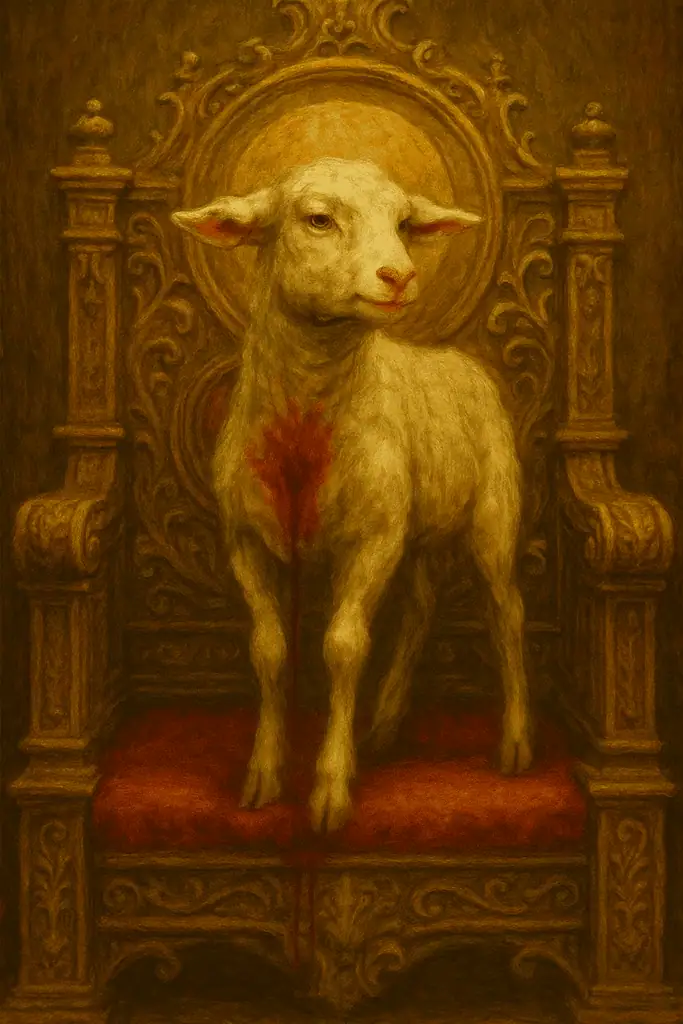
Revelation is not a puzzle to solve—it’s a person to encounter. The Lamb is central, and covenant is the key to understanding. The Book of Revelation pulls back the veil between what is seen and what remains hidden.
Revelation was never to terrify—but to unveil. To pull back the veil between what is seen and what remains hidden. Between the empires that roar and the Lamb that was slain.
The final scroll of scripture does not arrive with explanatory footnotes or systematic theology. It comes to us in dreams and visions, in symbols and songs, in thunder and tears. It speaks not in the language of empire, but in the forgotten tongue of covenant—of berith—the ancient promise that binds Creator to creation not through domination, but through hesed.
The Dragon rules from the shadows. And beneath him, the Beast controls everything: speech, loyalty, belief. But the slain Lamb stands. And those who have eyes to see catch glimpses of another kingdom breathing beneath the machinery of empire.
🔑 Key Takeaways:
- Revelation centers on encountering the Lamb, not decoding end-time puzzles.
- The book pulls back the curtain to reveal covenant truths hidden beneath empire.
- Biblical apocalypse offers hope, not horror—a call to presence and faithfulness.
- Revelation speaks in symbol, song, and vision, not systematic charts.
- The Lamb’s kingdom already exists beneath the surface of power systems.
Beyond the Veil of Misreading
The Book of Revelation has been twisted, weaponized, and commodified. It has been reduced to timelines and tribulations, to escape hatches and end-times charts. But maybe such readings betray the text itself.
🔑 Key Takeaways:
- Popular readings of Revelation often distort its meaning.
- Commercialized, fear-based interpretations betray its covenantal core.
- The true focus is on the Lamb, not the Beast.
Historical Context of Revelation
When John of Patmos received these visions while exiled on a Roman penal colony, he wasn’t crafting a secret code for 21st century Americans. He was offering a radical reframing of reality for communities suffering under the weight of empire. His apocalyptic imagery wasn’t about escaping this world—it was about seeing through the facades of power to glimpse the Lamb already standing in our midst.
🔑 Key Takeaways:
- John’s vision was for suffering first-century churches, not future escape plans.
- His message is resistance through covenantal clarity, not coded timelines.
- Apocalyptic vision is meant to reframe present suffering, not forecast doom.
The Lamb’s Counter-Narrative
But the slain Lamb offers a counter-story. He doesn’t crush empires—He calls hearts home. He doesn’t demand allegiance—He keeps berith. Where Rome’s power flows downward through hierarchy and violence, the Lamb’s authority rises upward through service and sacrifice. The Lamb is the center of all power and holiness.
🔑 Key Takeaways:
- The Lamb’s power is nonviolent, sacrificial, and covenantal.
- This narrative subverts empire by embodying vulnerability and presence.
- True holiness arises through faithful engagement, not escape.
Power and Vulnerability
Revelation doesn’t simply predict the Beast’s defeat—it unveils the Beast’s fundamental weakness. The empire’s power depends on our belief in its inevitability, its permanence, its claim to divine sanction. The Beast doesn’t kill with weapons alone. It kills with narratives.
But John’s visions show us that beneath the Beast’s carefully constructed reality lies a deeper truth: the Lamb was slain, yet stands. The covenant was never dead. Just buried. Waiting to breathe again.
🔑 Key Takeaways:
- Empire depends on illusion and consent, not true strength.
- The slain Lamb unravels imperial narratives of control and fear.
- Covenant truth is alive, waiting to be remembered.
The Empire’s Fear
What terrifies the Beast is not armed resistance—which it knows how to crush—but covenant memory that cannot be erased. The regime invests enormous resources in surveillance, propaganda, and public spectacle precisely because it fears what happens when people remember the Lamb.
Eyes that never blink monitor every prayer, measuring devotion in decibels and pupil dilation. The flame is everywhere projected from towers, engraved into uniforms, dancing on devotional screens. “Peace demands vigilance,” the voice reminds gently. “Report divergent thinking. It is an act of love.”
🔑 Key Takeaways:
- Covenant memory is more dangerous to empire than violence.
- Revelation exposes how fear-based control systems operate.
- Prophetic remembrance undermines totalitarian surveillance.
The Illusion of Power
But Revelation shows us what the Beast cannot acknowledge: its power is derivative, temporary, and ultimately illusory. The Dragon’s authority is always borrowed, never intrinsic. The Beast’s deadly wound that seemed healed reveals the fundamental vulnerability at the heart of every empire that sets itself against the Lamb.
🔑 Key Takeaways:
- Empire’s power is performative and impermanent.
- The true battle is theological, not political or military.
- The Lamb exposes the deep weakness beneath the surface of oppression.
The Reframing of Everything
At its core, Revelation offers not prediction but reframing. It invites us to see our present reality through covenant eyes—to recognize that beneath the Beast’s carefully constructed narrative lies a deeper truth.
Babylon the Great appears as the inevitable pinnacle of civilization, clothed in luxury and drunk on the blood of prophets. She seems invincible, eternal, necessary. “Who is like the Beast, and who can fight against it?” ask those who have accepted its framing of reality.
🔑 Key Takeaways:
- Revelation teaches reframing, not prediction.
- Babylon’s glamour is an illusion propped up by propaganda and fear.
- The faithful are called to discern true covenant reality beneath empire’s mask.
Seeing Through the Façade
But John’s vision reframes her glory as transient and her wealth as theft. What seems like strength is revealed as desperate weakness. What appears as peace is unmasked as systematic violence maintained through spectacle and surveillance.
This reframing is not merely conceptual—it is existential. It demands a choice: Will you accept the mark that allows you to buy and sell within the Beast’s economy? Or will you remember the Lamb’s hesed that cannot be calculated or commodified?
🔑 Key Takeaways:
- John’s vision demands discernment and decision.
- Choosing the Lamb over the Beast involves economic and social cost.
- Revelation reveals systems of injustice cloaked as peace.
The Final Invitation
The Book of Revelation doesn’t end with destruction, but with invitation:
“The Spirit and the bride say, ‘Come.’ And let everyone who hears say, ‘Come.’ And let everyone who is thirsty come. Let anyone who wishes take the water of life as a gift.”
In a world where everything has been commodified, measured, and monetized, Revelation reminds us that what matters most remains a gift. Not earned through compliance or purchased through sacrifice, but freely offered through covenant hesed that has never forgotten our name.
🔑 Key Takeaways:
- Revelation ends in invitation, not destruction.
- God’s gift is unearned and freely offered, in contrast to empire’s economy.
- The call is to come to the water of life, not escape to the clouds.